Boat Photography Tips: How to Take Stunning Photos at Sea

A boat trip in Rio de Janeiro offers scenery that looks straight out of a postcard: Sugarloaf Mountain seen from the water, Christ the Redeemer peeking through the clouds, the sunset painting Guanabara Bay in shades of gold. But how do you capture all of this in photos that truly do the moment justice?
In this guide, we've gathered the best photography tips for your boat trip, from the most effective angles to the rules for flying a drone in Rio. Whether you're shooting with a phone or a professional camera, you'll step off the boat with breathtaking images.
Best Angles for Photographing on a Boat
A moving boat offers unique perspectives you simply can't get on dry land. Knowing where to position yourself makes all the difference between an ordinary photo and a spectacular image.
- Bow (front of the boat): the classic angle for landscape shots. Position yourself at the tip and use landscape orientation to capture the vastness of the sea with Rio's iconic landmarks in the background. It's the perfect spot for that iconic photo with your arms open and the wind in your hair.
- Stern (back of the boat): ideal for selfies with the wake creating natural leading lines behind you. The churning water at the stern adds dynamism and texture to any image.
- Flybridge (upper deck): available on boats like the WeBoat 420, the flybridge offers a privileged 360-degree view. From here you can photograph both the landscape and your group enjoying themselves on the lower deck, creating compositions with depth.
- Water level: crouch down and shoot just above the surface. This dramatic angle places the viewer "inside" the scene, with the water in the foreground and the horizon behind. Works especially well with a GoPro in wide-angle mode.
Golden Hour: The Secret to Perfect Photos
The golden hour is the period just after sunrise and before sunset, when natural light becomes soft, warm, and golden. This is, without a doubt, the best time to photograph at sea.
In Rio de Janeiro, the timing varies throughout the year:
- Summer (December to March): sunset between 6:15 PM and 6:45 PM. Golden hour starts around 5:15 PM.
- Autumn (April to June): sunset between 5:00 PM and 5:30 PM. Golden hour starts around 4:00 PM.
- Winter (July to September): sunset between 5:15 PM and 5:30 PM. Golden hour starts around 4:15 PM.
- Spring (October to November): sunset between 5:45 PM and 6:15 PM. Golden hour starts around 4:45 PM.
The sunset boat trips are the most sought-after for photography. The golden light reflecting off the sea and the buildings along Copacabana creates an unforgettable setting, perfect for romantic photos, photo shoots, and marriage proposals.
Bonus tip: in the 15 minutes right after sunset (known as the "blue hour"), the sky takes on shades of blue and pink that also produce extraordinary photos. Don't put your phone away too early.
Gear: What to Bring and How to Protect It
Phone
For most people, a phone is more than enough. Modern smartphones have excellent cameras, especially in good lighting conditions like those at sea. A few tips:
- Waterproof phone case: a must-have investment. IP68-rated cases start at R$ 30 (~$6 USD) and protect against splashes, sea spray, and accidental drops in the water. Some even allow you to use the touchscreen normally.
- HDR mode: enable auto HDR to balance the strong sunlight with the shadows on the boat. This prevents photos from being "blown out" (too bright) or too dark.
- Frequent cleaning: sea spray deposits salt on your phone's lens. Bring a microfiber cloth and wipe the lens every 15-20 minutes.
GoPro and Action Cameras
The GoPro is the perfect companion for boat trips: compact, waterproof, and with a wide-angle lens that captures expansive scenery. Use SuperView mode for landscapes and linear mode for portraits. Bring a floating handler for shots in the water without the risk of losing your gear.
Professional Camera
If you take photography seriously, a DSLR or mirrorless camera delivers unmatched quality. We recommend a 24-70mm lens as a versatile option for the maritime environment. However, it requires extra care with the sea air. Use a dry bag when not shooting and avoid changing lenses on board.
Drones in Rio de Janeiro: Rules and Tips
Aerial drone footage can transform any boat trip video into cinematic content. However, flying a drone in Rio de Janeiro requires compliance with ANAC (Brazil's National Civil Aviation Agency) regulations.
Drone Rules - Important Notice
Rio de Janeiro has strict airspace control zones due to the proximity of Santos Dumont Airport (downtown) and Galeão International Airport (Ilha do Governador). Flying without authorization can result in fines.
- ANAC registration: all drones weighing over 250g must be registered in ANAC's SISANT system.
- SARPAS authorization: to fly in controlled areas (which covers virtually the entire Rio coastline), you must request authorization through the SARPAS system at least 15 days in advance.
- Maximum altitude: 120 meters (400 feet).
- Visual line of sight: the pilot must maintain visual contact with the drone at all times.
- Prohibited areas: immediate surroundings of Santos Dumont Airport, military bases, and public security zones.
If you don't have a drone or prefer not to deal with the paperwork, WeBoat can include a professional drone operator on your trip. Check availability and pricing via WhatsApp.
Instagrammable Spots by Route
Each WeBoat route passes through spots with unique photographic potential. Here are the best spots for each route:
Praia Vermelha
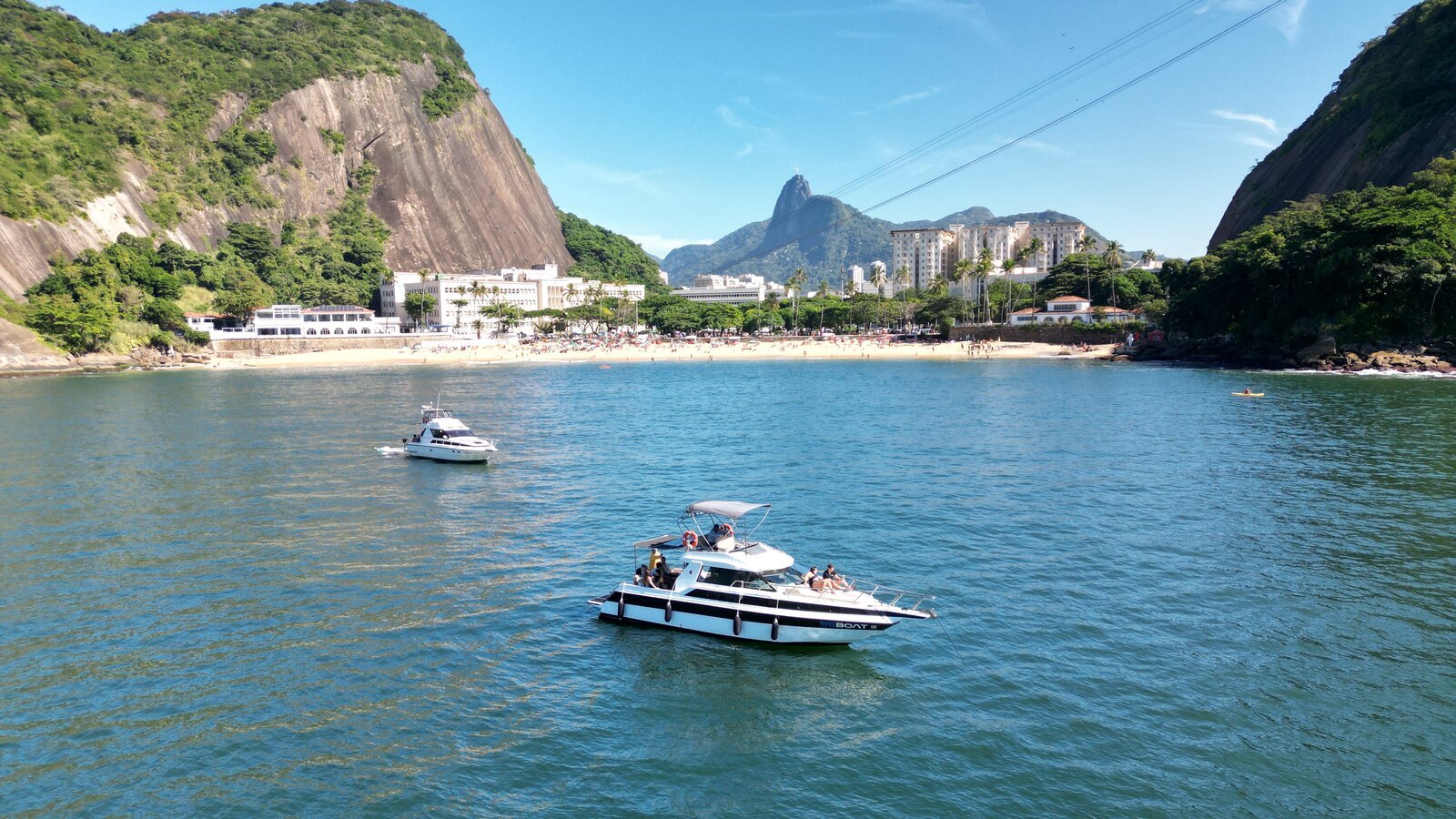
The Praia Vermelha route is the most photographed. The angle of the boat positioned in front of Praia Vermelha with Sugarloaf Mountain dominating the background is simply unbeatable. It's the photo every tourist dreams of, but few manage to capture from this exclusive angle seen from the sea.
Copacabana
From the sea, you can capture the entire stretch of Copacabana's coastline in a single shot, with the curving beach and the hills in the background. At sunset, the beachfront buildings reflect golden tones that create a spectacular scene.
Ilhas Cagarras
The Ilhas Cagarras offer crystal-clear water in shades of emerald green, perfect for underwater photos with a GoPro. The rocky formations and island vegetation create dramatic and exotic backdrops. It's one of the few places in Rio with underwater visibility of up to 10 meters (33 feet).
Mureta da Urca
The picturesque setting of Urca, with its colorful houses, small fishing boats, and Sugarloaf Mountain in the background, produces photos with a charming, almost European feel. It's the perfect spot for those looking for a warmer, more romantic aesthetic.
Composition Tips for Photos at Sea
Beyond the scenery, composition technique is what separates a good photo from a memorable one:
- Rule of thirds: imagine the image divided into 9 equal parts (3x3). Place the horizon on the upper or lower third, never in the center. Most phones have the rule-of-thirds grid available in camera settings.
- Boat as a frame: use elements of the vessel (railings, bow, ropes) as natural framing for your photos. This creates depth and context.
- People on the bow with scenery: the combination of a person contemplating the landscape (with their back to the camera) against a grand backdrop is one of the most powerful compositions in nautical photography.
- Water reflections: in calm waters, the reflections of the sky and hills create beautiful symmetrical compositions. Lower your angle to include more water in the frame.
- Leading lines: the boat's wake, the side railing, and the horizon are natural lines that guide the viewer's eye to the point of interest.
Protecting Your Gear in the Maritime Environment
The sea is beautiful but relentless on electronic equipment. Salt, spray, sun, and humidity are the enemies of your phone and camera:
- Salt and spray: the sea air deposits microscopic salt crystals on everything. Clean lenses and screens frequently with a microfiber cloth. After the trip, wipe all equipment with a cloth dampened with fresh water.
- Direct sunlight: never leave your phone or camera exposed to the sun for extended periods. Overheating can damage the battery and screen. Store them in the shade when not in use.
- Secure storage: WeBoat's boats have protected interior compartments. Use them to store your gear when swimming or when the boat is at speed.
- Dry bag: invest in a dry bag (starting at R$ 40, ~$8 USD) to store your phone, wallet, and documents. Some models allow you to use the touchscreen through the plastic.
Stories and Reels: Short Video Tips
Photos are great, but short videos have even more impact on social media. Here are some tips for creating video content on the boat:
- Time-lapse: position your phone at a fixed spot on the boat (with a suction cup or a stand) and record a 30-60 minute time-lapse. The result shows the changing scenery and light in a mesmerizing way. Works particularly well during sunset.
- Slow motion: use slow-motion mode to capture the boat hitting the waves, splashes, dives, and toasts. These moments look cinematic in slow motion.
- Transitions: film your hand covering the lens and then revealing a new setting to create natural transitions between scenes. Example: cover with your hand at Urca and reveal at Copacabana.
- Ambient sound: the sound of the engine, waves, and wind adds immersion. For at least one segment, record without music to capture the sound of the sea.
- Vertical format (9:16): for Stories and Reels, shoot vertically. For horizontal YouTube and TikTok content, shoot horizontally. When in doubt, shoot horizontally and crop later.
Professional Photographer Service
For special occasions like marriage proposals, bachelorette parties, birthdays, or photo shoots, having a professional photographer on board makes all the difference.
WeBoat can arrange a professional photographer on board for your trip, with prices starting at R$ 1,200 (~$240 USD). The service includes:
- Photographer experienced in nautical and event photography
- Professional editing of all images
- Digital delivery in high resolution (online gallery)
- Option to include video and drone footage (ask for pricing)
Check availability and pricing via WhatsApp. We recommend booking the photographer at least one week in advance, especially for weekends.
Frequently Asked Questions About Boat Photography
Can I fly a drone during the boat trip in Rio de Janeiro?
Yes, but with restrictions. Rio de Janeiro has controlled airspace near Santos Dumont Airport, which requires prior authorization through ANAC's SARPAS system. Request it at least 15 days in advance. Maximum altitude: 120 meters (400 feet).
What is the best time to take photos on the boat?
Golden hour is unbeatable. In summer, start shooting around 5:15 PM. In winter, around 4:15 PM. The sunset trips are ideal for those who prioritize photography.
How do I protect my phone from saltwater?
Use a waterproof case (IP68, starting at R$ 30, ~$6 USD), clean the lens frequently, and store your phone in the shade when not in use. After the trip, wipe it with a cloth dampened with fresh water. Learn more about what to bring on the trip.
Does WeBoat offer a professional photographer?
Yes. Professional photographer on board starting at R$ 1,200 (~$240 USD), with editing and high-resolution delivery. Ideal for special events. Check availability and see all our add-on services.
Want to Take Stunning Photos at Sea?
Book your boat trip and experience the most photographed scenery in Rio de Janeiro. Trips starting at R$ 2,300 (~$460 USD), with the best views in the city.